

Building Facades · Wayne & New Jersey
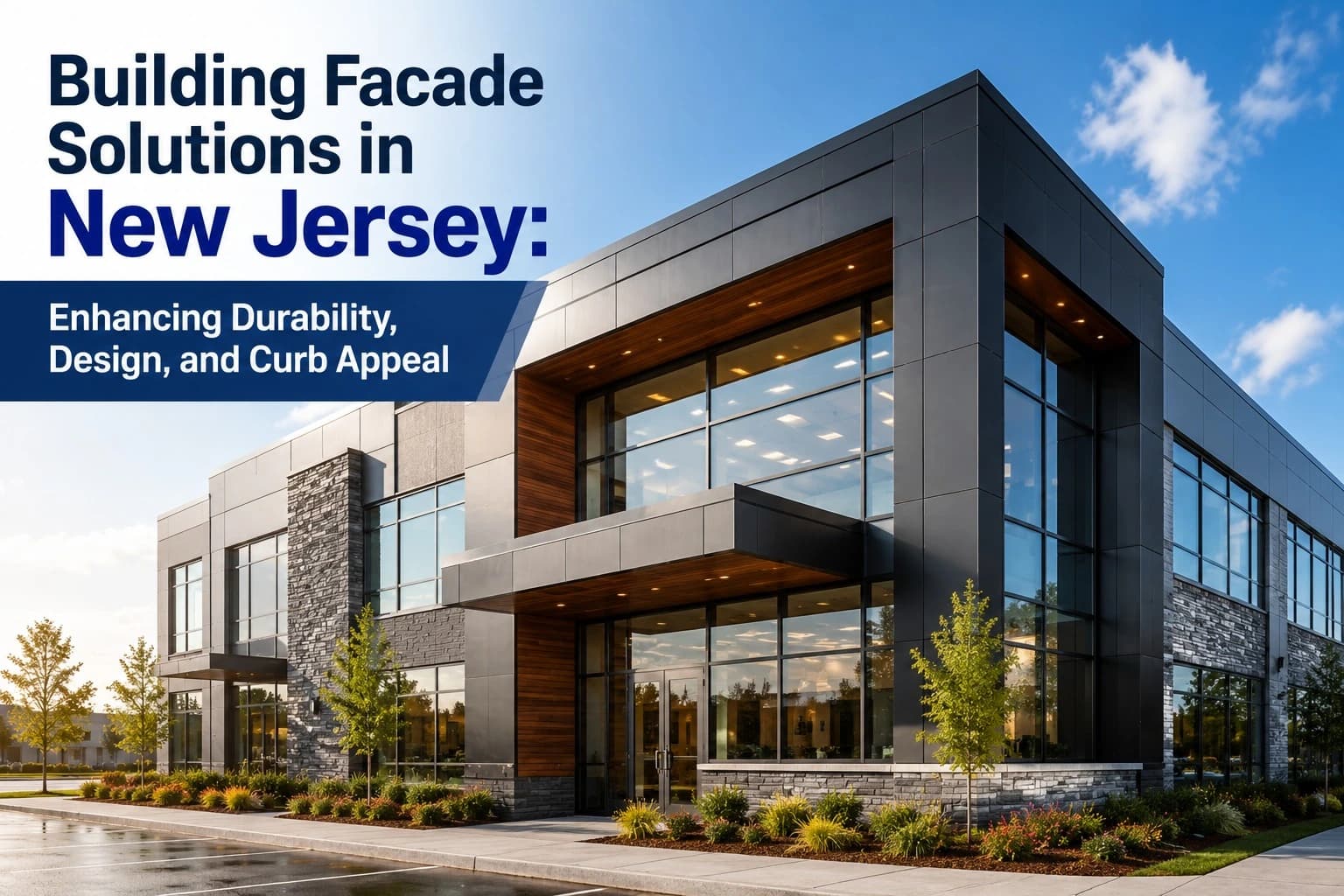
Building Facade Solutions in New Jersey: Enhancing Durability, Design, and Curb Appeal
Building facade in New Jersey focus on improving the exterior performance, appearance, and longevity of commercial and residential properties. These solutions enhance durability, energy efficiency, safety, and curb appeal while protecting buildings from harsh weather conditions.
In a state like New Jersey, where properties face heavy rain, snow, humidity, coastal air, and temperature fluctuations, a strong facade system is essential. Professional facade design and restoration not only improve aesthetics but also extend the lifespan of the structure and reduce maintenance costs.
Definition
What Are Building Facade Solutions?
Building facade solutions refer to exterior systems and services designed to protect and enhance a building's outer shell. This includes cladding, insulation, waterproofing, restoration, and architectural upgrades.
A building facade is the exterior surface of a structure that protects it from weather while contributing to design, energy efficiency, and structural durability.
Facade Solutions May Include
- • Exterior cladding systems
- • Curtain wall systems
- • Stone or brick restoration
- • Waterproof coatings
- • Thermal insulation upgrades
- • Structural repairs
- • Window replacement integration
Why It Matters
Why Are Facade Solutions Important in New Jersey?
New Jersey buildings face seasonal extremes. Without proper facade systems, properties may experience water damage, heat loss, cracks, and structural deterioration.
Key Reasons
- • Heavy snowfall and freeze-thaw cycles
- • Coastal humidity in certain regions
- • Storm exposure
- • Aging commercial buildings
- • Increasing energy-efficiency standards
Advantages
Benefits of Professional Facade Services
Professional facade contractors in New Jersey provide technical expertise, safety compliance, and long-term durability.
Improved structural protection
Enhanced curb appeal
Increased property value
Better energy efficiency
Reduced maintenance costs
Compliance with local codes
Improved tenant satisfaction
Professional building facade solutions improve durability, reduce energy costs, enhance appearance, and protect structures from weather damage.
Systems
Types of Building Facade Systems
| System | Best For | Main Benefit |
|---|---|---|
| Cladding | Commercial buildings | Protection and design |
| Curtain wall | Office towers | Modern appearance |
| Masonry restoration | Older properties | Structural repair |
| Waterproofing | All building types | Moisture control |
| Insulated panels | Large facilities | Energy savings |
Materials
Common Materials Used in Modern Facades
Modern facade systems use advanced materials designed for durability and aesthetics.
Performance
How Facades Improve Energy Efficiency
Energy-efficient facades reduce heat transfer between interior and exterior environments by adding insulation, reducing air leakage, and supporting energy-efficient openings and glazing.
They Help By
- • Adding insulation layers
- • Reducing air leakage
- • Installing energy-efficient windows
- • Using reflective exterior materials
An energy-efficient building envelope reduces heat loss in winter and heat gain in summer, improving comfort and lowering utility costs.
Case Study
Real-World Example: Commercial Building Upgrade
A mid-sized office building in New Jersey upgraded its outdated exterior with insulated aluminum composite panels and waterproof sealing systems.
Results
- • 18% reduction in energy costs
- • Improved modern appearance
- • Increased tenant occupancy
- • Reduced water leakage issues
Process
How a Facade Project Works
Step 1
Site Inspection: experts assess building condition and exterior damage.
Step 2
Design Planning: architects and engineers develop improvement plans.
Step 3
Material Selection: systems are selected for budget and performance goals.
Step 4
Installation or Restoration: certified crews execute approved methods.
Step 5
Final Inspection: quality and code-compliance verification.
How-To Summary
Facade projects follow inspection, design, material selection, installation, and quality verification stages.
Longevity
Maintenance and Long-Term Performance
Proper material selection, installation quality, and routine maintenance help facade systems stay durable and reduce lifecycle costs.
Waterproof coatings and preventive inspections significantly reduce moisture-related damage over time.
Local Context
Building Facade Solutions in Wayne, New Jersey
Local contractors understand regional building codes, climate conditions, and architectural styles.
Local Considerations
- • Snow load requirements
- • Energy efficiency compliance
- • Historic district guidelines
- • Commercial zoning regulations
Google Business Profile Tips
- • Add facade service categories
- • Upload before-and-after project images
- • Collect customer reviews
- • Include service areas like Wayne and nearby towns
- • Keep NAP details consistent
Name, Address, Phone
Local SEO Example Phrase
Building facade solutions in Wayne, NJ for commercial and residential properties.
FAQ
Frequently Asked Questions
EEAT Signals
How to Demonstrate Expertise and Trust
Use these trust signals to strengthen authority for facade-related content and services.
- • Use certified contractors with licensed experience.
- • Follow NJ building regulations.
- • Use quality-tested materials.
- • Document project stages with reports and inspections.
- • Maintain safety compliance during installation.
Including case studies, project photos, and client testimonials strengthens authority and trust.
Checklist
Before Starting a Facade Project
- • Inspect existing exterior condition
- • Define performance goals
- • Choose appropriate materials
- • Confirm local code compliance
- • Set budget and timeline
- • Hire experienced facade professionals
- • Plan for maintenance strategy
Conclusion
Final Thoughts
Building facade solutions in New Jersey are essential for protecting structures, improving energy efficiency, and enhancing architectural appeal. Whether for commercial properties, residential buildings, or renovation projects, a well-designed facade system increases durability, safety, and long-term value.
From cladding systems and curtain walls to waterproofing and restoration, professional facade services help buildings withstand New Jersey’s climate while maintaining modern design standards.
Get Started
Ready to Upgrade Your Building Exterior?
Consult experienced facade professionals in New Jersey to choose the right system for performance, compliance, and design goals.
Learn More About Our Services→